



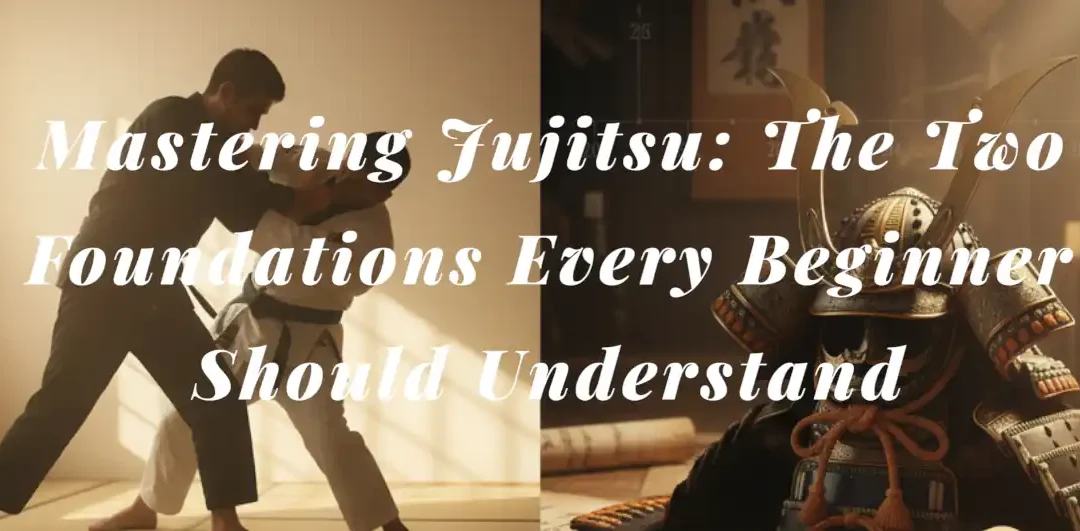
Why “Understanding Jujitsu” Is More Than Learning Moves
Most people begin jujitsu with a simple goal: learn techniques that work. But classical jujitsu isn’t just a collection of throws, locks, and chokes. It’s a complete martial system shaped by two powerful forces:
- Theory — the ideas and strategy behind the art
- History — the real-world events that shaped how the art changed over time
If you train without understanding both, you might learn movements—but miss the “why” that makes them effective.
Foundation #1: The Theory Behind the Art
Every martial art has an internal logic. In jujitsu, that logic is built around a practical question:
How can someone overcome aggression and strength without trying to match it head-on?
The theory of jujitsu explains:
- the art’s overall goal (control and survival, not brute domination)
- the strategy it prefers (efficiency, timing, leverage)
- the mindset it trains (calm, adaptable, analytical)
This is why jujitsu often rewards patience. You’re not trying to “win the clash.” You’re trying to create a situation where your opponent’s strength becomes less useful.
Foundation #2: The History That Shaped Its Methods
Theory tells you what jujitsu aims for. History tells you how it got there.
Martial arts evolve because the world changes. For jujitsu, key influences included:
- periods of warfare, where weapons and armor mattered most
- periods of peace, where personal protection became the priority
- political rules and social structure, including weapon restrictions for civilians
- modernization, which forced older arts to adapt or fade
When you study history, you learn something important:
martial arts are solutions to real problems.
When the problem changes, the solution changes too.
Why You Need Both: A Clearer View of What Jujitsu Is
If you only study theory, you may over-romanticize the art and ignore how messy real change is. If you only study history, you may memorize dates without understanding what jujitsu is trying to achieve.
Together, theory + history answer beginner questions like:
- Why does jujitsu emphasize leverage and vulnerable targets?
- Why do some schools focus on civilian self-defense while others feel more “military”?
- Why do training methods differ between traditional styles and modern systems?
- Why does strategy matter as much as technique?
This blended understanding also prevents confusion when you see contradictions—like the famous idea of jujitsu being a “gentle art” even though some techniques can be severe. The theory explains the “gentle” part is strategic (efficiency), not harmlessness. The history explains why combative methods existed in the first place.

To truly understand jujitsu, study both its ideas and its evolution.
How to Apply This as a Student (Practical Steps)
You don’t need to become a historian to benefit. A simple approach works:
1) Learn the purpose of what you practice
When you drill a lock or throw, ask:
- What problem is this solving?
- What kind of attacker or situation does it assume?
2) Notice what your training emphasizes
Different contexts produce different priorities:
- battlefield reality tends to prioritize control under chaos
- civilian self-defense tends to prioritize quick escape and disabling options
- sport environments prioritize safety and repeatable testing
3) Study strategy, not only technique
Technique is “what.” Strategy is “when and why.”
Jujitsu becomes powerful when the student starts recognizing:
- off-balancing moments
- weak structural angles
- predictable reactions under pressure
The Big Takeaway
To master jujitsu, don’t treat it like a bag of tricks. Treat it like a living system with a brain and a story.
- Theory teaches you the art’s guiding principles and tactical mindset.
- History shows you why the art developed the way it did—and why it keeps changing.
When both foundations are clear, your training becomes sharper, more intentional, and easier to remember.