


The Truth About Jujitsu’s “Ultimate Origin”
People often search for a single birthplace of jujitsu—India, China, or elsewhere. The more realistic view is simpler:
fighting systems emerge wherever people face conflict.
Because humans share the same basic anatomy and face similar dangers across cultures, it’s normal for different regions to develop similar grappling and control methods without one “master source.”
So instead of chasing a mythic beginning, it’s better to look at what the Japanese historical record actually shows: a gradual evolution from local combat habits into organized schools.
Early Japanese Combat: Many Names, No Single System
In Japan’s earliest periods, there were references to rough grappling and combative contests long before “jujitsu” became a standard term.
Early fighting methods appeared under different labels, reflecting the fact that techniques existed before a unified identity did. These were practical skills, not yet a formalized martial curriculum with ranks, standardized drills, and professional instruction.
The Turning Point: The Ryu System (Schools)
A major leap in development occurred when Japan began forming ryu—formal schools of martial instruction.
Why schools matter:
- techniques improve faster when practitioners train together
- knowledge survives when it’s documented and passed down
- training becomes systematic rather than improvised
Over time, professional teachers refined techniques, created structured curricula, and trained students who continued the tradition. Local rulers often supported these schools because they needed trained fighters during periods of unrest.
This “combat school system” became the engine that allowed martial knowledge to accumulate and evolve.
Battlefield Grappling: Kumiuchi and Armor Reality
As Japan’s warrior culture expanded, battlefield grappling became essential as a secondary skill—especially when:
- weapons were lost or broken
- fighting became too close for effective weapon use
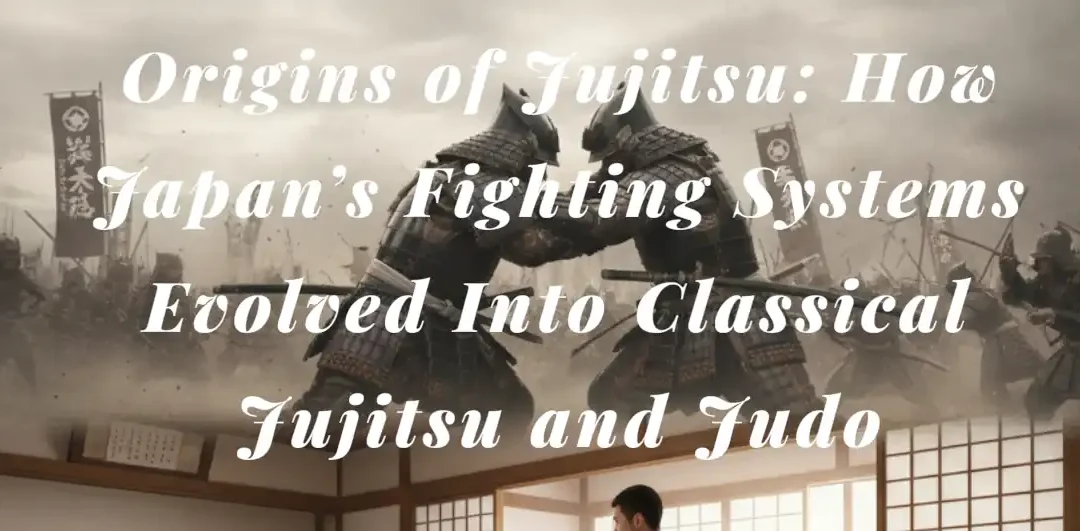
In armored combat, striking is less useful. A punch or kick won’t do much to someone protected by heavy armor. That’s why many battlefield methods emphasized:
- off-balancing
- clinching and grappling
- takedowns and ground control
- finishing with short weapons or restraint once the opponent was down
As armor changed over time (becoming lighter and more mobile), grappling methods also adapted.
Read Mor: Best Shoyoroll Gis In Stock Right Now (2026 Buyer’s Guide)
The Rise of Koryu Jujitsu: From War to Civilian Defense
As open warfare declined—especially after major national unification—martial priorities shifted. In long peace, people still faced violence, but the context was different:
- personal protection
- street conflicts
- restraint and control
- empty-hand defense (especially for those without weapons)
This is where classical jujitsu (koryu) truly expands as an independent identity—less tied to battlefield weapon curricula and more oriented toward civilian situations.
A major milestone in this story is the founding of early schools that emphasized empty-hand methods more heavily than typical battlefield systems, helping set the pattern for later jujitsu traditions.

Jujitsu evolved with Japan—from battlefield survival to civilian defense and modern training.
Popularity, Competition, and Decline
In peaceful eras, jujitsu schools expanded greatly. But over time, several pressures damaged traditional jujitsu’s standing:
- decreased demand for combat training during extended peace
- overcrowding of schools competing for students
- harsh rivalry expressed in public challenge matches
- a worsening public image that associated jujitsu with brawling rather than disciplined training
When Japan entered rapid modernization, arts tied to the “old order” faced even more resistance.
Jigoro Kano’s Reform: Training Method Changes Everything
During the modernization period, Kano studied traditional jujitsu but saw key problems:
- lack of structured beginner progression
- higher injury risk without systematic safety training
- inconsistent curriculum
- heavy reliance on cooperative practice that didn’t prepare students for resistance
Kano’s major contribution wasn’t creating hundreds of brand-new techniques. It was improving how people trained so they could apply techniques under pressure with reduced injury risk.
By limiting dangerous techniques in live practice and emphasizing pressure-tested training, Kano’s approach produced practitioners who performed well in public contests—helping the reformed system gain legitimacy.
The 1886 Tournament: A Public Turning Point
A major public competition (often discussed as a decisive moment) boosted the credibility of Kano’s system and accelerated the decline of many older schools in the public eye. When a new method wins highly visible matches, it changes what people choose to train—fast.
Key Takeaway
Jujitsu’s origins are best understood as a long evolution:
- early local combat habits
- organized schools that preserved and refined knowledge
- battlefield grappling shaping core mechanics
- peace shifting emphasis toward civilian defense
- modernization rewarding systems with safer, pressure-tested training
That story is more complex than a single founder—but far more useful for understanding what jujitsu is today.
Want to learn more? Check out our next article here.